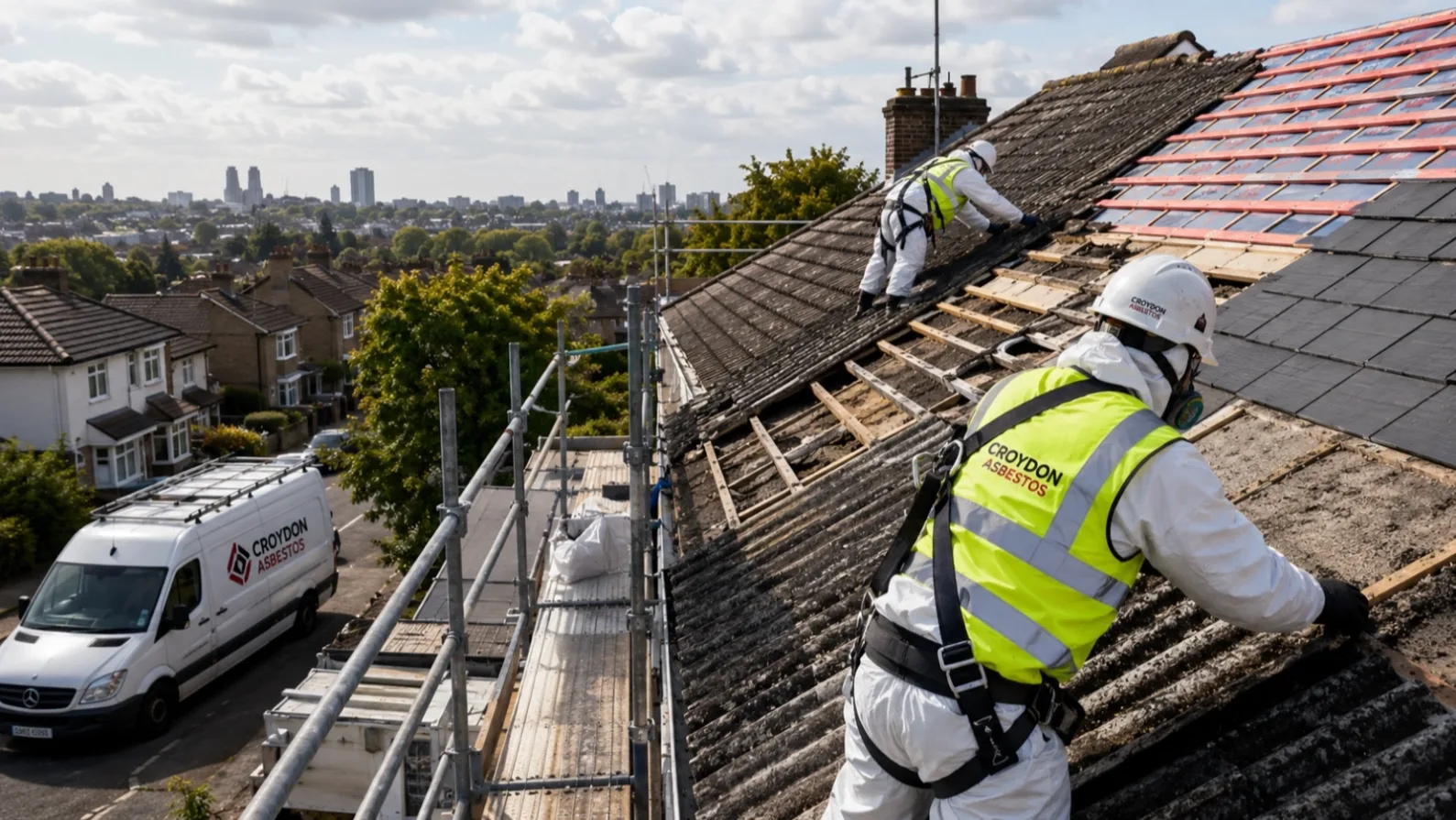
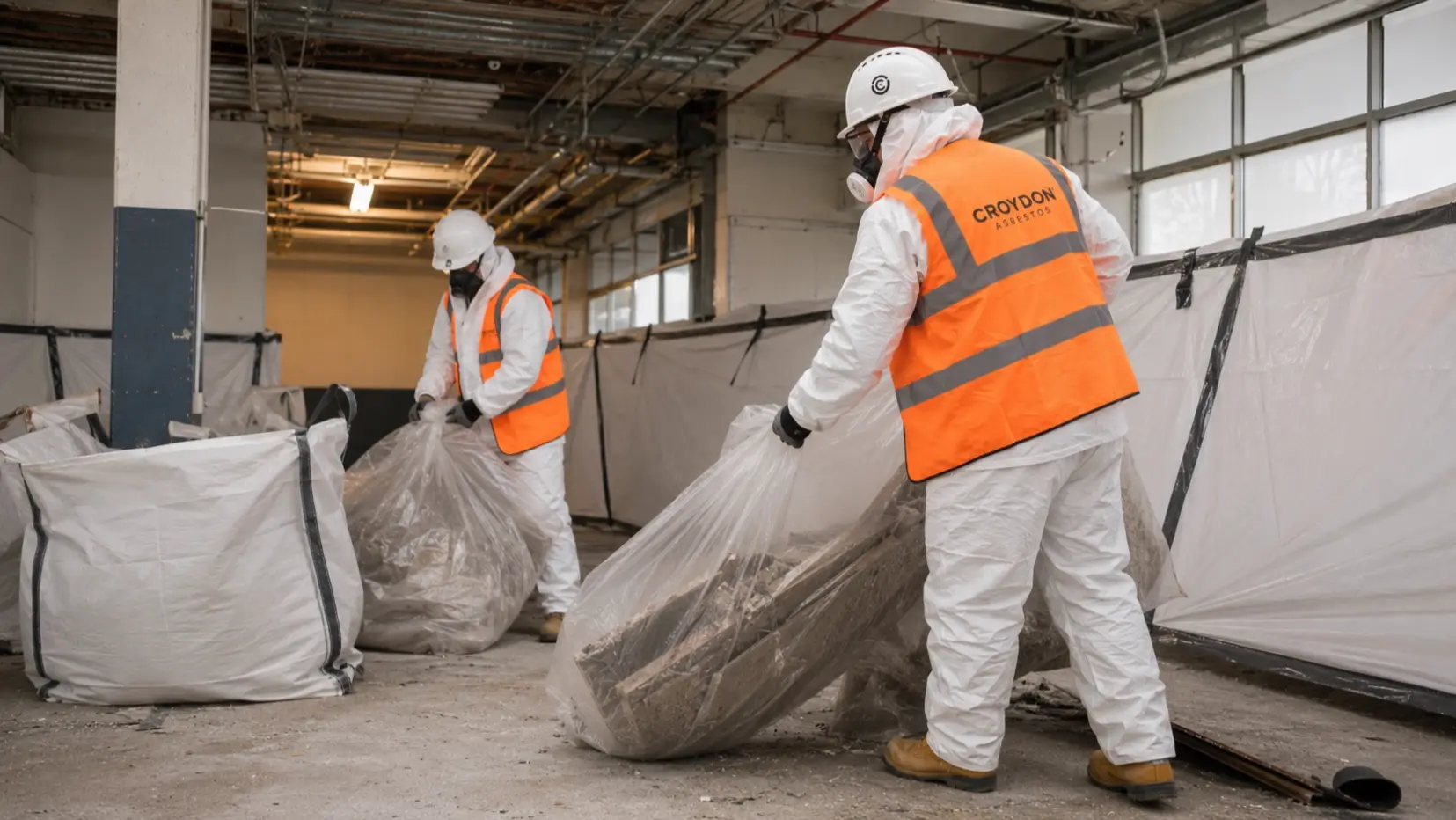
It happens more often than most people expect. A builder pulls back a ceiling tile. Someone sands a wall before decorating. A floor fitter lifts old vinyl and finds a layer of black adhesive and nine-inch tiles underneath. Work stops, someone mentions asbestos, and suddenly nobody’s sure what the right next move is.
The correct sequence is straightforward.
Stop work in that area
The moment something suspect is uncovered, work in that zone stops. Not the whole site necessarily ; just the area immediately around the material. Close the room if possible and seal the door with tape if you have it.
The instinct to carry on, especially when trades are on the clock, is understandable. Resist it. Most accidental exposures happen not at the point of discovery, but in the minutes afterwards, when someone vacuums up the dust or carries on sanding without thinking.
Don’t clean up
Leave the debris exactly where it is. Don’t sweep, don’t vacuum with a household hoover, and don’t wash the area down. Standard vacuum cleaners and brushes spread fibres rather than collecting them, and wet mopping can carry contamination further into the space.
Keep others out and call a specialist
Make the area off-limits until it has been assessed. If it’s a shared building ; a block of flats or a commercial unit ; inform whoever manages the building. If other contractors have already been in the area, note who was present and when.
Then call a specialist. A trained operative can take a sample from the suspect material, have it analysed at a UKAS-accredited laboratory, and return a written result within a few days. Where significant disturbance has already occurred, air testing can confirm whether airborne fibre levels have returned to background before the area is reoccupied.
Get written confirmation before restarting
Once the material has been identified and any disturbance dealt with properly, you need written confirmation before trades return. This might be a clearance air test result, a completion certificate from a removal contractor, or both ; depending on what was found and what was disturbed.
This documentation is the evidence that the project was managed competently. It matters to lenders, insurers and future buyers, and it closes the question permanently rather than leaving it open.
The reassuring reality
Most mid-renovation asbestos discoveries turn out to be manageable. A ceiling board, a few floor tiles, a length of old flue: these are routine removal jobs, priced modestly, completed quickly and documented properly. The uncertainty is almost always worse than the actual situation.
The disruption of a two-day pause for assessment and proper removal is almost always less than the disruption of a contaminated site. Stop, assess, get the facts in writing, then restart.