Lift a carpet in a 1950s–70s Croydon kitchen or hallway and you’ll often find vinyl tiles in the tell-tale nine-inch format, bedded on black bitumen adhesive. Both tile and adhesive can contain asbestos, a fact that surfaces mid-renovation.
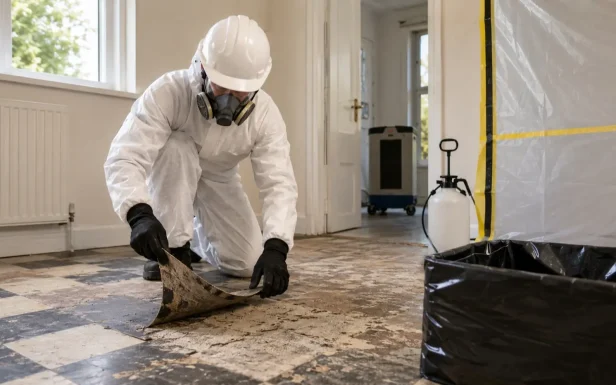

Tiles are lifted whole using controlled techniques: no dry scraping, no grinding, no heat guns. Where adhesive needs to come up, it’s removed under the same controls, subfloor handed back with the paperwork your fitter needs.
Kitchens, hallways and ex-shop units all routine
Managed-in-place option documented where needed
From sampling both layers to subfloor handover, every step is controlled, documented and priced in writing before work begins.
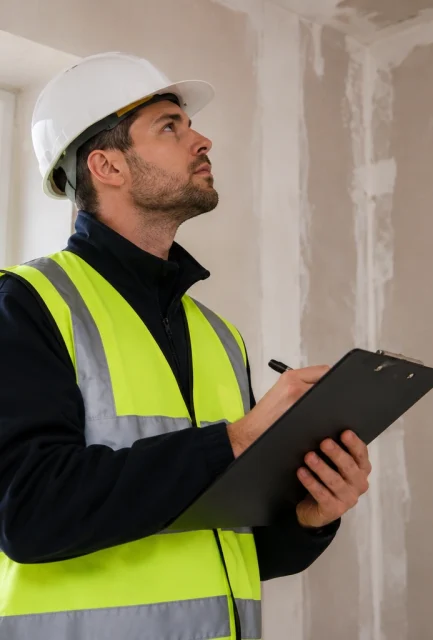
Both layers tested separately at a UKAS-accredited lab; they don’t always match, and the answer shapes the method and the price.
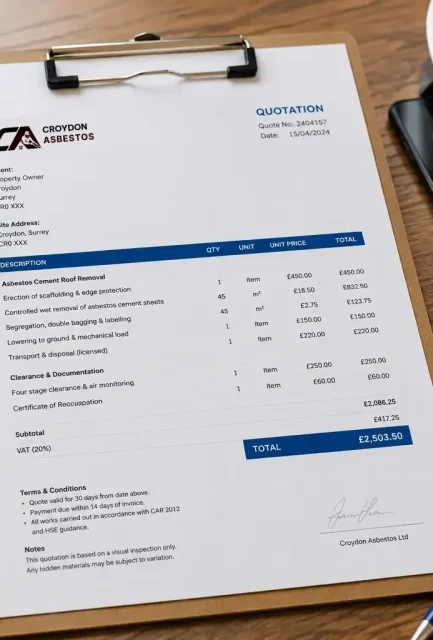
Removal quoted alongside a documented leave-in-place option where the tiles are sound and your new floor allows it. Your call, made informed.

Area sealed, tiles lifted intact with hand methods, adhesive removed where scoped; all arisings bagged at source, floors damp-wiped, never dry-swept.

Surface left clean and fit for your flooring contractor, waste consigned, note and lab results issued for the property file.
Tile-only testing is how "cleared" floors turn out not to be.
Subfloor condition agreed against what your new floor needs.
The two shortcuts that turn a floor job into an air-quality incident
If leaving them sealed in place is the smarter move, we'll put that in writing
FAQS
No. Intact tiles lying flat under a floor covering release essentially nothing. The rule is simple: don’t sand, grind, smash or heat them. Photograph, cover back over, and get them tested; then decide with real information.
Often yes, if the tiles are sound, flat and the new floor’s requirements allow it; and it’s a legitimate management approach when documented. Where levelling compound or adhesion demands a clean subfloor, removal is the right answer. We’ll tell you which applies to yours.
Frequently. Bitumen adhesives of the era commonly contained fibre, which is why we always test it separately and why any quote that ignores the adhesive should worry you. Ours doesn’t.
Typically a day for an average Croydon kitchen or hallway, including the clean-down. Larger commercial areas are phased and programmed at survey.
Keep everyone out of the room, don’t sweep or vacuum, close the door and call us. We’ll advise the same day, arrange air testing where warranted, and remediate properly so the renovation restarts with written reassurance rather than a lingering question.
Generally non-licensed or NNLW when done with controlled hand methods; no HSE licence required, but trained operatives are essential. The category is confirmed in your written quote along with any notification we’ll make on your behalf.
Yes. Both layers are sampled together, analysed separately, and reported as one written result. One visit, two answers, and a price for each scenario so you’re never waiting on a second appointment.
Controlled hand-lifting is designed to protect the subfloor; where aged screed is fragile, we tell you at survey and agree the finish standard with your flooring in mind. The handover condition is specified in the quote, not improvised.
Kitchens in Addiscombe, hallways in Thornton Heath, ex-shop units in the centre: every district and the bordering streets beyond. The same tested-first, no-grinding method travels everywhere.
Questions about a job or a quote? Email the team directly.
[email protected]
Speak to a surveyor, not a call handler.
Sales
07798 984290
Support / Enquiries
07468 437558
2 Park Rd
Guildford GU1 4PH
United Kingdom
CONTACT US
Send us your postcode and a description of the material you’ve found. A surveyor will be with you the same week, and your fixed written price follows within 48 hours.
