Abatement is the full toolkit: removal, encapsulation, enclosure and repair. Each has its place: removal ends the liability; encapsulation stabilises sound material; enclosure isolates it; repair addresses damage. We carry the whole kit, so the recommendation follows the material.
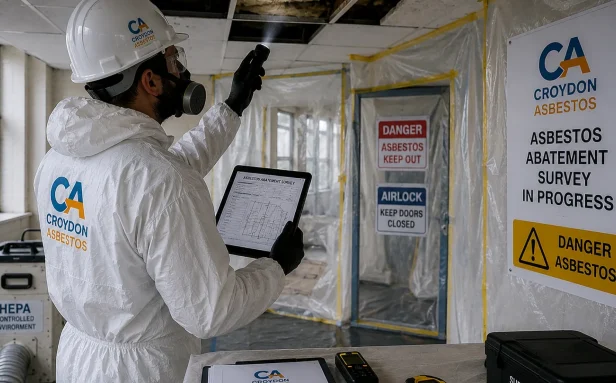
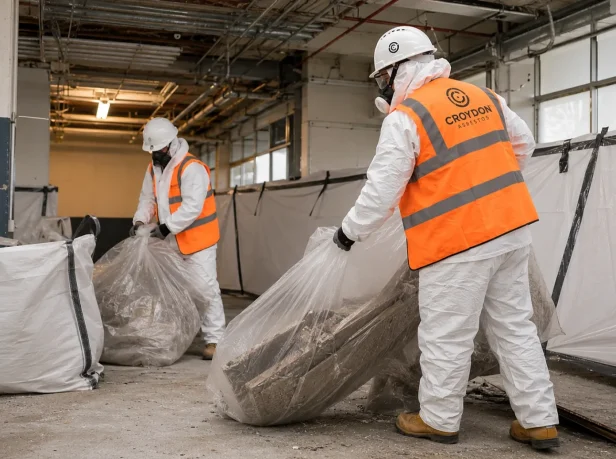
Your abatement plan starts from survey data, assigns each material its proportionate control, and prices them individually. A mixed building gets a mixed, sensible answer; the register is updated so the strategy survives.
Domestic, commercial and industrial abatement programmes
Phased delivery so budgets and buildings absorb the work
From material-by-material assessment to updated register, every step is documented and every recommendation carries its reasoning in writing.
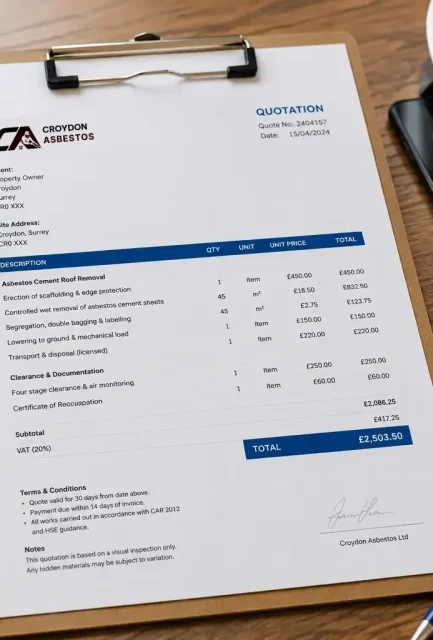
Every item scored for condition, friability, location and disturbance risk; the evidence base the recommendation stands on.

Each material matched to its proportionate control with costs side by side: remove, encapsulate, enclose or repair-and-monitor. You choose informed.
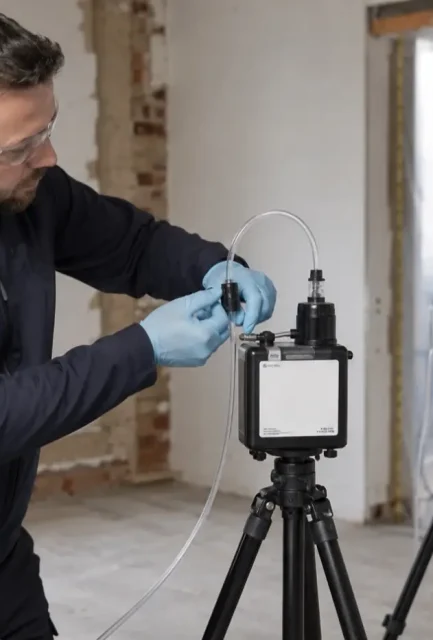
Works executed under the correct regime per material; non-licensed, NNLW or licensed arrangements, with air testing where categories require it.

Completion documents issued and the asbestos register amended, so what was done, why, and what remains under management is permanently on record.
Carrying every tool removes the incentive to prescribe the expensive one.
Recommendations weigh reinspection costs, disturbance risk and your building plans, not just this quarter.
Remove three items, encapsulate two, monitor four; buildings are rarely all-or-nothing.
Every recommendation written with its reasoning attached.
FAQS
Removal is one abatement method among four. Abatement is the discipline of matching each material to the right control; removal, encapsulation, enclosure or repair, based on risk rather than reflex. The distinction matters most when budgets meet buildings with a lot of managed material.
When the material is sound, well-adhered and unlikely to be disturbed; a stable coating in a low-traffic area, for instance. Encapsulation stabilises it at a fraction of removal cost. When material is damaged, deteriorating or sits where works or wear will find it, removal earns its price.
Sometimes deferral is the correct engineering answer; plenty of managed material will outlast the building’s next three owners without releasing a fibre. The dishonest version is leaving it undocumented. Managed-in-place with a live register and reinspection isn’t deferral; it’s a strategy.
Yes. Priority items first, stable items scheduled across phases, each phase fixed-priced and the register updated as you go. Buildings and budgets both prefer sequenced work; risk scoring tells us the safe sequence.
Item by item against the chosen control, assembled into one written programme figure; so you can see exactly what removing item three versus encapsulating it does to the total. Transparency here is what makes the options table honest.
You do, with our recommendation and reasoning in writing beside each option. We’ll argue our case where safety demands it, but informed clients choosing between legitimate controls is precisely how this should work.
Anything with more than a handful of managed materials; schools, blocks, commercial portfolios, larger homes mid-renovation. The programme’s value grows with the number of decisions it organises.
Removal items close permanently; encapsulated, enclosed and repaired items enter the monitoring cycle with dates attached. The register update at completion is what turns a set of works into a strategy.
Every district and building type; and where a portfolio crosses the boundary, the programme crosses with it. One standard, one register format, however many sites.
Questions about a job or a quote? Email the team directly.
[email protected]
Speak to a surveyor, not a call handler.
Sales
07798 984290
Support / Enquiries
07468 437558
2 Park Rd
Guildford GU1 4PH
United Kingdom
CONTACT US
Send us your postcode and a description of the material you’ve found. A surveyor will be with you the same week, and your fixed written price follows within 48 hours.
