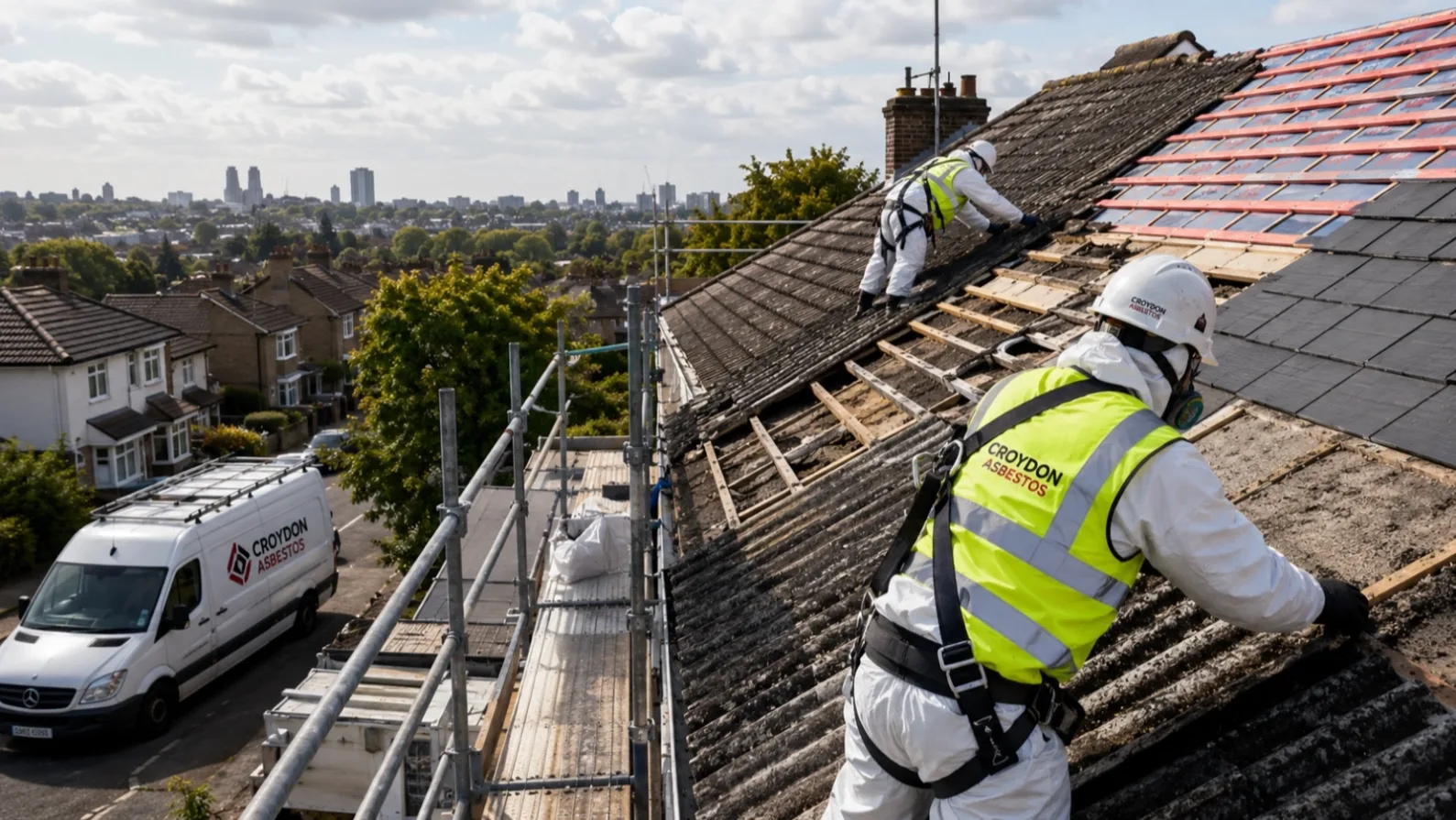
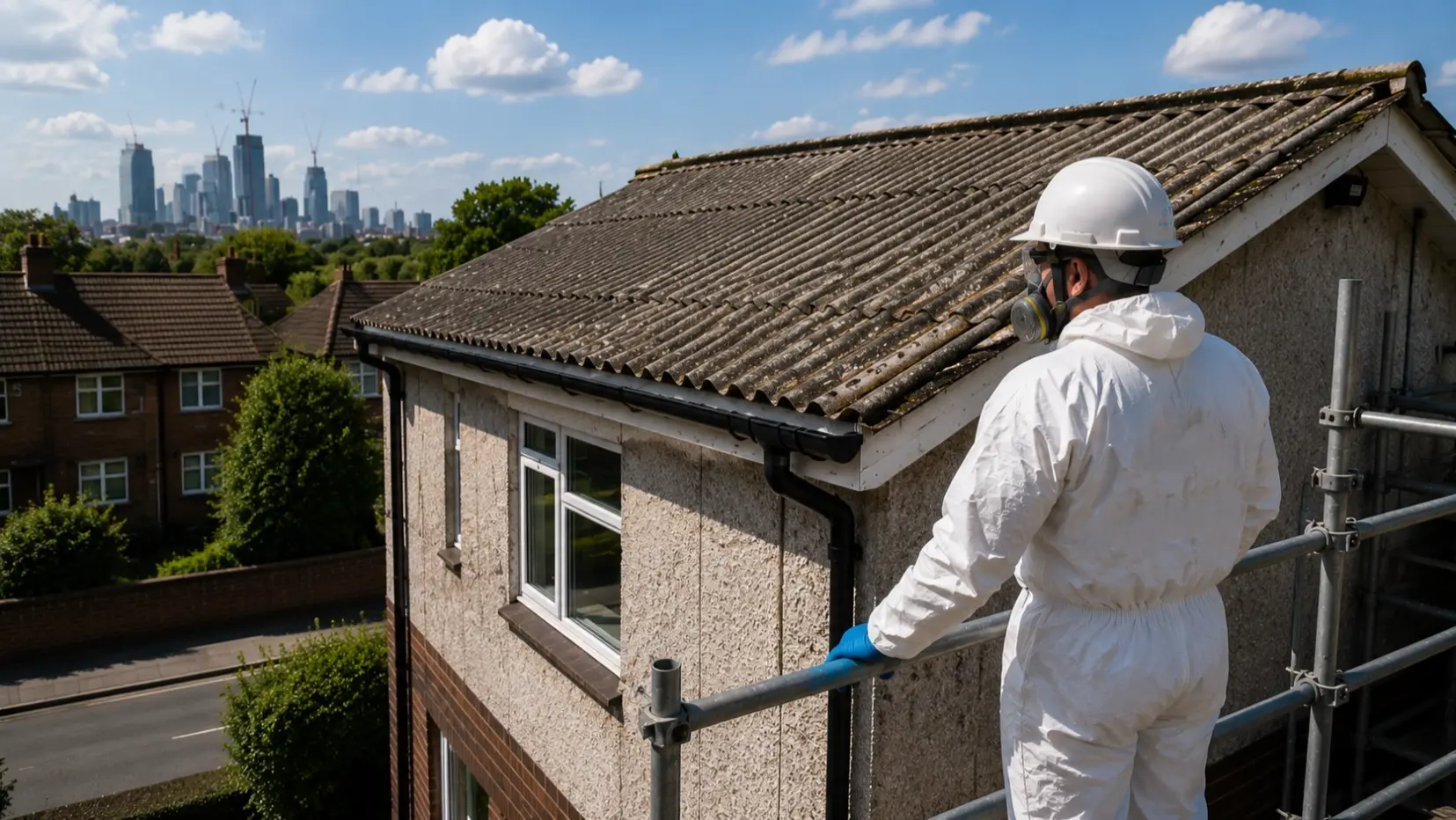
Walk down any street of interwar semis in Croydon and you’ll pass a row of garages with grey corrugated roofs. Most were built between the 1950s and 1980s. Most of those roofs are asbestos cement. The question most homeowners ask isn’t whether it’s asbestos ; it’s whether they need to do anything about it.
What to look for
There are a few telltale signs: heavy, rigid sheets with deep corrugations and a rough, stone-like texture; a grey colour that’s often gone green-grey or brown from decades of moss and weathering; sheets fixed to timber purlins with hooked bolts, often with patches of lichen along the joins.
But here’s the honest truth: you cannot confirm it by looking. Modern fibre cement sheets look almost identical. Age is your best clue. If the garage predates 2000, treat the roof as suspect until a lab sample says otherwise.
Does it matter if it’s not leaking?
A sound, undisturbed asbestos cement roof releases very little. The fibres are locked inside the cement matrix, and as long as the sheets are intact, the risk is low. The problems start when the material is weathered, cracked or broken ; decades of frost, moss and rain leave sheets brittle and the edges chalky, and that’s when fibres begin releasing.
There’s also a physical hazard worth knowing about. Asbestos cement roofs are classed as fragile. They can fail without warning under load ; a ladder against the edge, heavy snow, someone climbing up to clear the gutters. Falls through fragile roofs remain a leading cause of serious construction injuries in the UK.
What you should never do
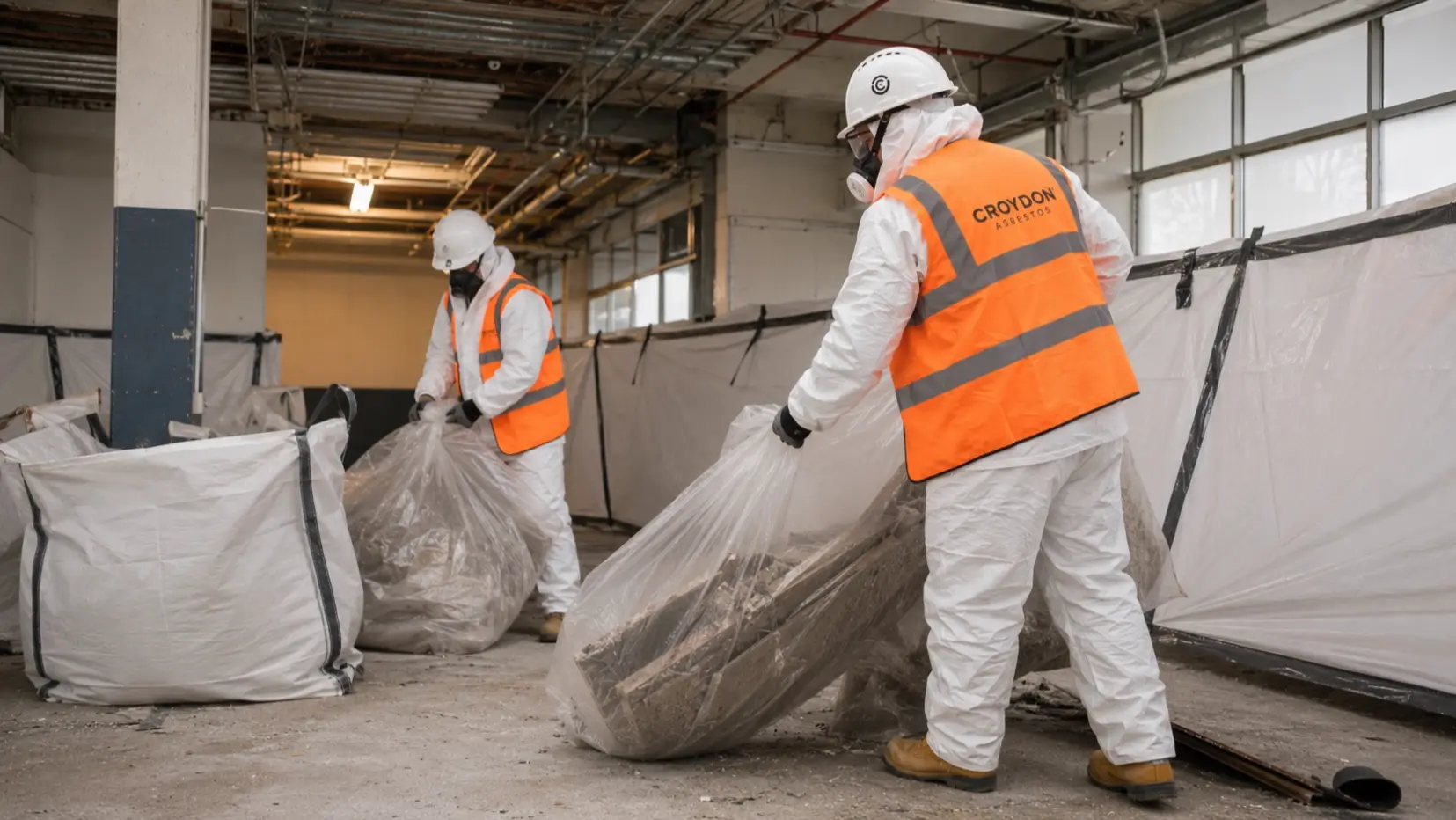
The temptation when a garage is being cleared or demolished is to break the sheets up to get them in a skip or a car. This is precisely where most accidental exposures happen. Breaking sheets releases fibres, contaminates the surrounding area, and leaves you with hazardous waste that no household tip or general skip can legally accept. Pressure-washing is equally problematic; it blasts fibres free and spreads contaminated slurry across the drive and garden.
The right next step
If the roof is intact and you’re not planning works, there’s no need to rush. Monitor it, don’t disturb it, and note it in your property documents.
If the roof is cracked, leaking, or demolition is on the cards, the process is straightforward. A free survey confirms the material and scope. A fixed written price follows within 48 hours, covering removal, disposal and paperwork. A trained operative removes the sheets whole, bags and wraps them on site, and routes everything to a licensed facility. Most single garages are done in the morning.
The consignment note you receive at completion is the legal proof the waste went where it should ; and it’s the document solicitors ask for when the property eventually sells. Worth keeping on file.